Short answer: If your safety switch trips with nothing plugged in, the leak is coming from something that’s always connected: a hard-wired appliance like the oven or hot water unit, a wet outdoor power point or light, damaged cable in the walls or roof, or a worn-out safety switch. You can find the circuit yourself. The repair needs a licensed electrician.
“I’ve unplugged everything and it still goes off” is one of the calls we get most, usually late at night and often after a storm. The switch is doing its job. The cause is just somewhere you can’t see.
What is a safety switch actually reacting to?
A safety switch (also called an RCD, or residual current device) compares the current going out on the active wire with the current coming back on the neutral. If the two don’t match, some electricity is escaping, usually to earth, and possibly through a person. Most household units trip when that difference reaches 30 milliamps. Energy Safe Victoria says they cut the power within 0.03 of a second.
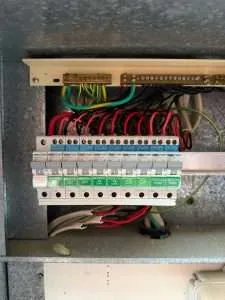
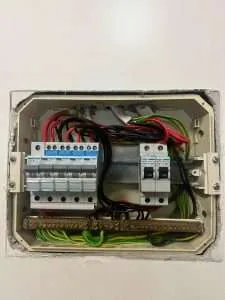
A circuit breaker is a different device. It reacts to too much current flowing, from an overload or a short circuit, and it doesn’t care about leakage. On your switchboard, the safety switch is the one with a test button and “30mA” printed on it.
So a safety switch tripping with nothing plugged in points to leakage, not overload. If it’s the breaker that keeps dropping instead, start with our guide to whether circuit breakers can go bad.

Is everything really unplugged?
Do a slow walk through the house first. The things people most often miss:
- The second fridge or freezer in the garage
- Anything on an outdoor power point: pond pumps, irrigation controllers, Christmas lights
- Power points hidden behind the TV cabinet, the bed or the washing machine
- Appliances plugged in inside a cupboard, like a rangehood, dishwasher or under-sink water unit
- Garage door and gate motors
Which hard-wired appliances can trip a safety switch?
Hard-wired equipment has no plug, so “unplugging everything” never disconnects it. The usual ones in Melbourne homes:
- Ovens and cooktops. Moisture in an oven element is a classic cause, covered in why an oven trips the power.
- Electric hot water units. These often heat overnight on off-peak, which is why some trips happen at 2am.
- Ducted heating, split systems and evaporative coolers, whose outdoor and roof units sit in the weather.
- Exhaust fans, ceiling fans and older downlights, where heat in the roof space breaks down insulation over time.
- Pool and spa equipment that’s wired in.
The steps further down show you how to find which circuit is at fault from the switchboard, without touching any wiring.
Why does the safety switch trip after rain?
If the pattern is “trips during or after rain, fine when it’s dry”, water is getting into something. The usual suspects:
- Outdoor power points, especially ones without a weatherproof cover, or with a cover that’s cracked or left open
- Garden lights and step lights, where the seals perish and water sits in the fitting
- Eave lights and sensor lights under a gutter that overflows
- Roof leaks dripping onto a junction box, a light fitting or a fan from above
- Underground cable to a shed or garden lights that has been nicked by a spade or has a poor joint
Moisture faults come and go, so everything can test fine on a sunny afternoon and trip again the next time it pours. Telling the electrician “it only happens when it rains” saves a lot of time. Don’t touch an outdoor fitting while it’s wet, and leave that circuit off until it’s been checked.

Can the safety switch itself be the problem?
Yes. Safety switches have moving parts and electronics, and they don’t last forever. An old or faulty unit can start tripping at a lower leakage than it’s rated for, or trip randomly with no fault at all. The opposite failure is more dangerous: a unit that won’t trip when it should. Pressing the test button tells you whether it’s still mechanically working.
There’s also a quieter cause in older switchboards. Every appliance and length of cable leaks a tiny amount of current, which is normal. If one safety switch covers most of the house, all those small leaks add up on a single device. Add a damp day and it tips over 30 milliamps. Current wiring rules (AS/NZS 3000:2018) require RCD protection on all final subcircuits in new homes and spread circuits across more than one safety switch, which is one reason a switchboard upgrade can cure nuisance tripping in an older home.
Could it be damaged wiring or rodents?
With no appliance or fitting to blame, the cable itself is next. What we find:
- Rats, mice and possums chewing through cable insulation in the roof space
- Screws and nails driven through a cable when someone hung a shelf, fitted a kitchen or installed a TV bracket
- Old rubber or cloth insulated wiring in pre-1960s homes that has gone brittle and crumbles when disturbed
- Heat damage from downlights, insulation packed over fittings, or a loose connection that has been overheating for years
- Recent renovations, where cable has been crushed, cut or left in contact with water
None of these can be found by looking. If you’ve heard scratching in the ceiling or smelt burning, mention it when you call.

What can you safely check yourself?
Stick to these steps. Use only the switches on the front of the board. Never remove the switchboard cover panel, never touch anything behind it, and stop straight away if the board is wet, hot or smells like burning.
- Note what was happening. Time of day, weather, and anything that had just turned on (hot water, heating, a pump). Write it down.
- Unplug or switch off everything you can, including the hidden items listed above.
- Try resetting the safety switch once. If it stays on, plug things back in one at a time, waiting a minute between each, until it trips. That last item is your suspect.
- If it trips straight away, turn off every circuit breaker under that safety switch, then reset the safety switch.
- Turn the circuit breakers back on one at a time. When the safety switch trips, the breaker you just turned on is the faulty circuit. Note its label (for example “Lights 2” or “Power outside”).
- Turn that one breaker off and leave it off. Reset the safety switch and turn the other breakers back on. Most of the house should now have power.
- Press the safety switch test button once everything is back on. It should trip instantly. If it doesn’t, the switch has failed and needs replacing. Our guide on testing an RCD explains the test in more detail.
Two resets is plenty. Flicking it on and off repeatedly won’t fix anything and can stress a fault that’s already arcing.
Call straight away, day or night, if any of these apply:
What will an electrician do?
A licensed electrician tests each circuit’s insulation resistance to find the leak, then narrows it down to the fitting, appliance or length of cable. They’ll also time-test the safety switch, which a push-button test can’t do. Energy Safe Victoria is blunt that unqualified electrical work is illegal, even changing a power point.
For replacements, see safety switch installation and repair. If the whole house is out, see our power outage electrician service, and for other everyday faults read common electrical problems and solutions. If it only trips when you boil the kettle, that’s a separate problem: see why a kettle trips the power.

Frequently asked questions
Why does my safety switch trip in the middle of the night?
Night trips usually line up with something that switches on by itself: an off-peak hot water unit, a timed heater, a pool pump, or a fridge compressor. Dew and falling temperatures can also let moisture into outdoor fittings overnight. Isolating circuits in the morning usually points to which one is responsible.
Is it safe to leave a safety switch off?
Leaving it off is safe, but you’ll have no power on those circuits. The better option is to turn off only the faulty circuit’s breaker and reset the safety switch, so the rest of the house stays protected and powered. Never tape, wedge or bypass a safety switch to keep it on.
Can a faulty safety switch trip with no load at all?
Yes. If the safety switch trips with every breaker underneath it turned off, the switch itself, or the wiring on its supply side, is the likely fault. That needs an electrician to test and replace it.
How often should I test my safety switch?
Energy Safe Victoria’s Test. Reset. Protect. campaign recommends pressing the test button on each safety switch every three months. Let everyone at home know first, because the power on those circuits will go off.
Can I fix the wiring fault myself?
No. In Victoria, all fixed electrical work must be done by a licensed electrician. You can unplug appliances, reset the switch, press the test button and turn breakers off to isolate a circuit. Anything behind a cover panel, inside a fitting or in the walls is off limits.
Safety switch still tripping? We can help tonight
Electrical Powerhaus has licensed electricians on call 24 hours a day, 7 days a week, across Melbourne. If your safety switch won’t hold, or you’ve spotted any of the warning signs above, call 03 6358 2028 or book through our 24/7 emergency electrician page. We’ll find the faulty circuit, fix it properly and test your safety switches before we leave. Our customers rate us 4.9 stars across 188 Google reviews.
First time calling us? You’ll get 15% off that first service. Pensioners and seniors get 10% off every job, not just the first.