Most of the time, a kettle that trips the power is a faulty kettle. Water has reached the element or base connector, current leaks to earth and the safety switch cuts the supply. If a circuit breaker drops instead, the kettle is likely overloading a circuit shared with a toaster, microwave or heater. Or the power point is worn.
The kettle is often the first appliance to show a problem because it combines water with one of the highest power draws in the kitchen. Here’s how to work out which of those causes you’re dealing with.
Why does a kettle trip the safety switch?
Your safety switch (RCD) watches for current leaking out of a circuit, and trips at around 30 milliamps. A kettle is close to the perfect leakage source: a 2,000 watt plus element sitting in water, a plastic body that can crack, and an electrical connector in the base that sits on a wet bench.
The faults we see most:
- Water in the base or connector. Overfilling, boiling over, a kettle put back on a puddle, or someone rinsing the base under the tap. Even a small amount of water across the base pins is enough to trip.
- A cracked body or failed seal letting water seep down onto the element connections.
- A failing element. Concealed elements sit under a metal plate in the bottom of the kettle. Over time the seal around that plate can let water reach the element terminals.
- A damaged cord, kinked where it leaves the base or pinched behind the toaster.
- Mineral build-up. Melbourne’s water is relatively soft, so heavy scale is less common here than in some other cities, but kettles in homes on tank or bore water can still build deposits that hold moisture against the element.
The giveaway is timing. A trip the moment you flick the kettle on usually means water across the base connector or cord. A trip after 30 seconds to a minute points to the element, which leaks more once it heats and expands.
Why does the kettle trip the circuit breaker instead?
If the safety switch stays on and it’s a circuit breaker that drops, the kettle probably isn’t faulty at all. It’s overload.
Most Australian kettles are rated somewhere between 2,000 and 2,400 watts. At 230 volts, a 2,400 watt kettle pulls just over 10 amps, which is the full rating of a standard power point. Run a toaster, air fryer, microwave or portable heater on the same circuit at the same time and you can exceed what the breaker allows. The breaker trips to stop the cable overheating.
Signs it’s an overload rather than a faulty kettle:
- It only trips when something else is running, and the kettle works fine on its own
- It happens in winter, when heaters are plugged in around the house
- The kettle, toaster and coffee machine all share one double power point or a powerboard
- Your home is older and the kitchen shares a circuit with the laundry or dining room
The fix is to spread the load. Avoid running the kettle and another heating appliance off the same power point, and don’t plug a kettle into a powerboard alongside other high-draw appliances. If the kitchen genuinely needs more capacity, an electrician can add a dedicated circuit or more power points.
Could it be the power point and not the kettle?
Yes, and this one matters, because a worn power point can overheat. Kettles draw close to the maximum current a power point is designed for, so any looseness in the socket contacts or terminals creates heat. Over months that heat can melt the plastic and scorch the wall plate.
Check the power point (without taking the cover off):
- Does the plug feel loose, or fall out easily?
- Is the face plate discoloured, brown, or warm to the touch after boiling?
- Can you smell hot plastic around it?
- Is it right next to the sink, where splashes reach it?
Any of those means stop using that power point and have it replaced. A melted or scorched power point is a fire risk, not just a nuisance.

Why does the kettle trip the power only sometimes?
Intermittent trips are frustrating. Common reasons:
- The kettle only trips when it’s been filled to the top and water creeps into the lid or spout seals
- It trips on humid or rainy days, when the leakage from the kettle adds to small leaks from other appliances on the same safety switch
- It only trips when another appliance is running on the same circuit
That second point is worth understanding. Every appliance leaks a tiny amount of current. In homes where one safety switch covers most of the house, those small leaks add up, and the kettle can be the final straw rather than the real fault. If your switch also trips when the kettle isn’t in use, read our guide to a safety switch tripping with nothing plugged in, because the cause is likely elsewhere.
What you can safely test at home
These steps involve nothing more than plugs, switches and the front of your switchboard. Don’t open the kettle, the power point or the switchboard cover.
- Unplug the kettle and leave it unplugged.
- Reset the switch that tripped. If it’s the safety switch, it’s the one with a test button. If it won’t stay on with the kettle unplugged, the kettle isn’t the cause and you need an electrician.
- Use the kitchen normally without the kettle for a while: toaster, microwave, other appliances. If nothing trips, the kettle is the prime suspect.
- Dry the base and the bench. Wipe the bench and the base plate, then leave the kettle and its base to air dry for 24 hours before trying again.
- Plug the kettle in on its own, with nothing else running on that power point, and boil it once.
- If it trips again, retire the kettle. For most households, replacing a kettle makes more sense than repairing it.
- If a new kettle also trips, or the trip only happens at one particular power point, the problem is the power point or the circuit. Leave that point unused and book an electrician.
If a circuit breaker tripped and the kettle works fine on its own, move the toaster or other appliance to a power point on a different circuit (your switchboard labels can help) and the problem should stop.
These signs mean the problem has moved beyond the kettle. Call a 24/7 electrician if:
Is a tripping kettle dangerous?
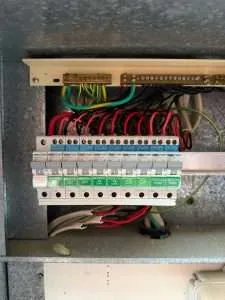
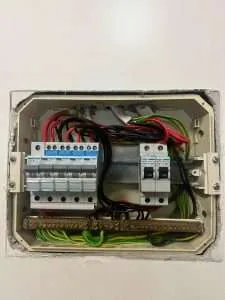
The trip itself is the safety switch working, and it may have stopped you getting a shock. The danger is when people keep resetting it and keep using the same kettle, or when the kettle is on a circuit with no safety switch at all. In older homes without RCD protection on the kitchen circuit, a leaking kettle may not trip anything. That’s a good reason to check your switchboard has safety switches. Energy Safe Victoria says you can recognise one by its test button and the “30mA” marking, and recommends testing each one every three months. Our guide on testing an RCD shows how.
If your home has no safety switches, or only one covering everything, our safety switch installation and repair team can quote on upgrading it. Remember that in Victoria, replacing a power point or adding a circuit is licensed work. Energy Safe Victoria warns against DIY electrical work, however small the job.
Got an oven doing the same thing? That’s a different set of causes, covered in oven tripping the power. For other everyday faults, see common electrical problems and solutions for Victorian residents.

Frequently asked questions
Why does my brand new kettle trip the power?
New kettles do occasionally arrive faulty, so return it if it trips straight out of the box. But if two different kettles trip at the same power point, the kettle isn’t the problem. Suspect the power point, the circuit, or other leakage on the same safety switch, and have an electrician test it.
Can a kettle trip the power to the whole house?
Yes, if your home has a single safety switch protecting every circuit, or if the fault is severe enough to trip the main switch. Modern switchboards split circuits across several safety switches so one faulty appliance doesn’t black out the house.
Is it safe to keep using a kettle that tripped once?
If it tripped once after being overfilled or set down on a wet bench, dry it thoroughly and try again. If it trips a second time when dry, stop using it. Repeated trips mean current is leaking somewhere it shouldn’t.
Should I get my kettle repaired?
Usually not. Kettles are sealed units and a leaking element or base generally means replacement. Spend the money on a new kettle and, if your power point is showing signs of heat, on having that replaced too.
Why does the kettle trip when the toaster is on?
That’s almost always an overload of the circuit breaker, not a fault in either appliance. Both draw a lot of current. Run them on power points on different circuits, or one at a time.
Can I plug my kettle into a powerboard?
It’s best not to. A powerboard shares one power point’s capacity across all its outlets. A kettle on its own can use nearly all of that, and adding a toaster or heater risks overheating the powerboard and the power point.

Burning smell or a switch that won’t reset? We’re on call 24/7
When a tripping kettle turns into a hot power point, a shock or a switch that won’t hold, call Electrical Powerhaus on 03 6358 2028. Our licensed electricians cover Melbourne around the clock, and we’ll test the circuit, replace damaged power points and check your safety switches are working. See our 24/7 emergency electrician service for more.
Two things worth knowing before you ring: new customers get 15% off their first service, and if you’re a pensioner or senior, you get 10% off every job we do for you. We’re rated 4.9 stars from 188 Google reviews.